Anyone who begins the journey of meditation soon encounters a common problem: thoughts keep appearing during meditation.
Many people eventually give up because of this. They assume that if thoughts are still coming, their meditation must have failed.
But the truth is that having thoughts during meditation is completely normal—especially in the early stages of the journey. In fact, expecting the mind to become completely thoughtless from the very beginning is unrealistic.
One of my classmates once asked me, “Can anyone meditate? And what should we do when thoughts arise during meditation?”
The eyes are a very sensitive, yet complex organ which plays a very important role in determining the quality of our life.
In Ayurveda, the eyes (Chakshu Indriya) are considered the most vital sensory organ, serving as a gateway to the inner self and a crucial tool for navigating the world.
While modern medicine has made major advancements in treating several eye conditions, it is also important to acknowledge that there are several eye disorders where Allopathy has no solution available.
In most cases, Allopathy offers 3 options:
Suppress the symptoms, typically using steroids
Conduct biological warfare through antibiotics
Surgery… (Since we can’t heal the organ, let’s excise the offending part…)
This scenario is true not just for eye conditions, but is valid for most health conditions treated by Allopathy. For eye disorders, the focus is on managing the condition ( a polite way of saying ‘suppressing the symptoms’), rather than healing the condition, or curing the patient.
Keeping these limitations of Allopathy in mind, it is important that people are aware of alternative therapies which can be used to treat & cure several vision disorders. After all, Allopathy is one of the youngest therapies in medicine with a legacy of a few hundred years. So it is strange that Allopathy claims to not just have a monopoly over medical knowledge, but also discredits every other therapy, some of which like Ayurveda & TCM have a history of thousands of years.
Let us look at some alternate therapies & their care providers, who have been successfully treating eye conditions.
AYURVEDA
Ayurveda, the “science of life” (Ayu+Veda), is a >5,000-year-old holistic healing system originating in ancient India. Ayurveda has 8 areas of specialization, and Vision related conditions come under the branch of ‘Shalakya Tantra’.
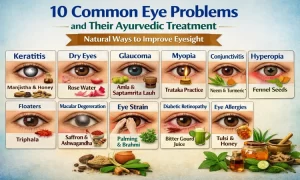
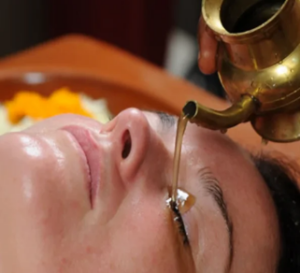
Ayurvedic Vaidyas of yore came up with specialized treatments & medications for not just treating eye disorders, but also for keeping eyes healthy. In modern times, the Kerala Ayurveda tradition has best preserved & propagated Ayurvedic eye treatment.
A list of typical ayurvedic treatments is given here:
Below we share, references to several well known Ayurvedic ophthalmologists, who are Ayurvedic physicians but specialize in treating eye conditions.
Dr B.G. Gokulan – Sudarshanam Eye Hospital
Based in Thiruvalla, Kerala, Dr Gokulan has more than 30 years of experience in treating eye conditions through Panchkarma therapies. He has resolved many cases which were not being cured by modern medicine. Being a relatively small institute, Sudarshanam provides personalized attention.
Founded by the Namboothiri family, traditional Ayurvedic Vaidyas for many generations, Sreedhareeyam has done commendable service in spreading the benefits of Ayurveda for eye treatment, and making Ayurvedic therapy a viable alternative for almost all vision conditions.
Sreedhareeyam now has more than 20 branch hospitals spread across India, and has also trained numerous Ayurvedic ophthalmologists who have started their own practices. Sreedhareeyam has grown into a behemoth, with hundreds of patients being treated at the same time at its Koothattukulam centre.
Matha is a small family run hospital with a legacy of 3 generations, run under the guidance of Dr P K Santhakumari, a renowned Ayurvedic physician who was one of the earliest Ayurvedic physicians to dedicate herself to treatment of eye disorders.
At Matha, each medicine is still hand-made and freshly prepared as prescribed in the traditional texts.
Prakash Nethralaya
Founded by Dr Dinesh Sharma in 2009, Prakash Nethralaya in Jaipur offers comprehensive treatments for all eye related conditions. Dr Dinesh Sharma received his training at Sreedhareeyam, and combines the best of Kerala Ayurveda & North Indian Ayurvedic practices.
Recorded cases of Homeopathy being used to cure vision related conditions go back more than a century.
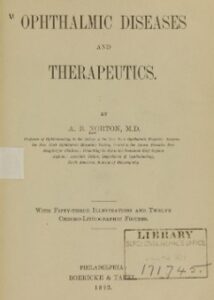
A complete list of eye conditions and their corresponding homeopathic remedies by Dr Norton, who was a 19th century New York based homeopathic physician, are available online. It will be a pleasant surprise for the modern practitioner to see such an old book provide a detailed description of eye conditions prevalent in the modern world as well.
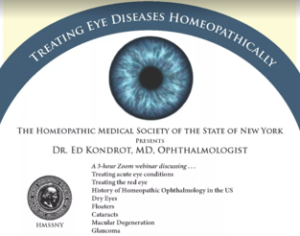
In modern times, Dr Ed Kondrot is a leading Homeopathic Ophthalmologist practising out of Scottsdale, AZ. In the US, Dr. Kondrot has been a board-certified ophthalmologist since 1981 and has practiced classical homeopathic medicine for 30 years. Having presented at several homeopathic and ophthalmologic conferences, he is also the author of five best-selling books about visual and general health.
In India, Dr Sandeep Sathye has been researching on the efficacy of Homeopathic therapeutics in eye conditions for more than than 35 years, at his Centre in Pune, India.
Acupuncture is believed to have originated in China, and is a complete health therapy capable of curing & healing various health conditions. When we look at Acupuncture from the perspective of vision disorders, there are several documented cases of acupuncture being successfully used to treat numerous vision related conditions.
There is increasing interest in exploring the role of Acupuncture in treating visual disorders amongst the Western medical fraternity. In the US, Dr. Deepinder K. Dhaliwal, MD, L.Ac, is a board certified doctor specializing in ophtlamology. She founded the Center for Integrative Ophthalmology at the University of Pittsburgh Department of Ophthalmology. After becoming a licensed acupuncturist in 2006, she established this specialized center to systematically research and provide holistic, complementary treatments for various eye diseases.
In India, Dr Ved Prakash Banga, MBBS runs a successful practice in Delhi known as Acu Eye Zone, where he has treated thousands of patients for conditions like Retinitis Pigmentosa, Macular Degeneration, Optic Nerve atrophy, Glaucoma etc.
A research paper has systematically reviewed the impact of acupuncture treatment on several degenerative conditions like Degenerative ocular diseases—including glaucoma, age-related macular degeneration (AMD), optic atrophy. Note, Allopathy has no cure for these conditions, and can only manage the symptoms through lifelong treatment.
Another paper reported measurable, significant visual function improvements in atleast 50% of Retinitis Pigmentosa patients after Acupuncture treatment.
Microcurrent stimulation (MCS) for the eyes uses gentle, low-level electrical currents to stimulate retinal or facial tissues. It has been used as a treatment for degenerative eye conditions like AMD, as well as for Dry Eyes. MCS helps in supporting nourishment and healing to the back of the eyes as well as cell regeneration.
Dr Marc Grossman has a clinic called Natural Eye Care in New Paltz, NY which focuses on treating visual disorders through nutritional support. The website of Natural Eye Care has a whole list of visual disorders & shares a list of complementary treatments including the relevant nutrients, that can be used to improve each condition.
The primary usage of technology is faster extraction of resources
There is a direct correlation between usage of technology and consumption of resources. As technological progress has zoomed after World War 2, so has the extraction of natural resources.
Technology begets Technology. If you put up an automobile manufacturing ‘plant’, you will need lots of ancillary industries as well, to keep feeding it with inputs. These plants will themselves need resources & energy from other plants.
A myth has taken hold amongst humans that only humans are spiritual. But what if the opposite is true ? That it is humans which have lost touch with their spiritual selves. And other living beings still leads spiritual lives.
The Yogic nature of animals
Let us look at the evidence. Except for humans, all other animals (and birds and insects and fishes and so on) live close to nature. Here we will use the term animals to denote all other non-human living beings.
Animals are more spiritual than humans. Animals live close to nature, have very few desires, do not accumulate stuff and live for the present. These are all signs of spiritual evolution. This is exactly how an advanced Yogi would live.Read more here→
For those of us who are botany-challenged, Google Lens has come as a boon.
For us city bred folks, who do not have a background in biology, it is difficult to distinguish a Jacaranda from a Jackfruit tree ! However, Google Lens has given even a layman the power to identify different types of trees.
There is a surprising thing each one of us can do, which will have a positive impact on the environment. At first glance, it may appear to be a selfish method, and it would seem that this method has nothing to with saving the Earth. However, if we examine closely, we will see that this method can have profound implications for ourselves as well as for all living beings.
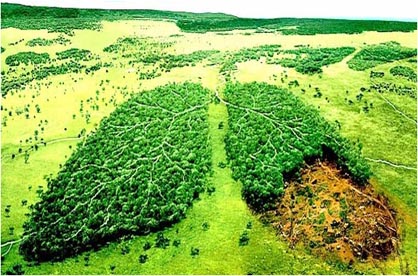
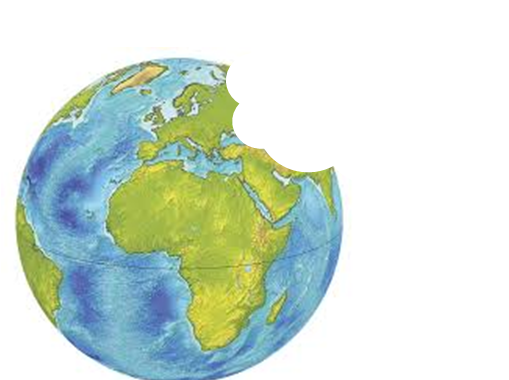
The earth is currently facing destruction of life forms on a mass scale. If these trends continue, the very survival of human life along with other species is at stake. In fact scientists refer to the existing era as one of ‘mass extinction’.
The World Wildlife Fund (WWF) has estimated that the Earth has lost 50% of its wildlife in the last 40 years.
We need to understand the HOW as well the WHY of the phenomena powering the Earth’s destruction. Unless we recognize the root causes which are motivating human actions we cannot stop the Earth’s descent to Doom.Read more here→