
“Global warming isn’t a prediction, it’s happening right now,” Dr. Justine Butler, Viva! Senior Researcher and author of ENVIROCIDAL, said in a statement sent to Plant Based News. “If these warnings are ignored, climate change will lead to a whole new range of health risks – from infectious disease outbreaks to water shortages, drought and mass extinctions. We must take urgent action to avert an environmental disaster.
Technology is the enemy of Nature The primary usage of technology is faster extraction of resources There is a direct correlation between usage of technology and consumption of resources. As technological progress has zoomed after World War 2, so has the extraction of natural resources. Technology begets Technology. If you put up an automobile manufacturing ‘plant’, you will need lots of ancillary industries as well, to keep feeding it with inputs. These plants will themselves need resources & energy from other plants.
Anyone who begins the journey of meditation soon encounters a common problem: thoughts keep appearing during meditation. Many people eventually give up because of this. They assume that if thoughts are still coming, their meditation must have failed. But the truth is that having thoughts during meditation is completely normal—especially in the early stages of the journey. In fact, expecting the mind to become completely thoughtless from the very beginning is unrealistic. One of my classmates once asked me, “Can anyone meditate? And what should we do when thoughts arise during meditation?” Let us answer this question in two parts. Is it okay to have thoughts while meditating? The problem begins when we assume that meditation is successful only when we reach a no-thought state. In doing so, we confuse the process of meditation with its possible end goal—thoughtlessness, samadhi, shunyata, Being, or whatever term one may use to describe that state of consciousness. Meditation is a practice, not a test that we either pass or fail. Yes, anyone can meditate. There are many meditation techniques available today, and most of them are relatively easy to learn. But when we first begin, thoughts will naturally arise. We cannot start at the Nursery level and expect to achieve PhD-level mastery overnight! As with any other skill, progress in meditation is gradual. With regular and sincere practice, however, we begin to notice changes. So, even if thoughts arise during meditation, it does not mean that the meditation has been unsuccessful. The practice is not about forcibly stopping thoughts. Rather, it is about becoming aware of them and gradually learning not to get carried away by them. Over time, the frequency and intensity of thoughts may begin to decrease. And isn’t that itself a sign of progress? There may also be other, unintended “side effects” of regular meditation: a growing sense of peace and calmness, less mental chatter, greater emotional balance, and a decreasing urge to react immediately to every situation. Eventually, something interesting begins to happen. You may notice that a day that begins with meditation feels distinctly different from a day without it. Of course, one may consider the deeper purpose of meditation to be going beyond the ordinary workings of the mind and accessing a deeper level of inner consciousness. But that is not something we can force or achieve overnight. It unfolds gradually—through patience, awareness, and steady practice. How to meditate Here, I will share some tried & tested ways which are very easy to learn & follow, and with which I have personal experience. You can start off with a daily 5 min practice using any of these techniques. a) Anapanasati meditation This meditation practice was used by Buddha to reach the state of enlightenment ! It is that powerful… It involves continuous & close observation of your breath. “Anapanasati meditation is a simple, 2,000-year-old Buddhist technique of mindfulness of breathing, focusing on observing the natural in-breath and out-breath to quiet the mind and cultivate deep awareness. By focusing on the breath, practitioners drop thoughts, raise energy vibrations, and enter a state of deep meditation or samadhi.” Here are a few resources which can help you with guided Anapanasati meditation: https://youtu.be/olNSYtSIS1s?si=o99n7jjH_bL4UvXb – 10 min version https://www.youtube.com/watch?v=A7jQ_BUgT8Q – 30 min version by Shreans Daga with detailed explanation of how the technique works b) Transcendental meditation It is extremely easy to learn & practice, but you will need to get personal training from a TM certified teacher. “Transcendental Meditation (TM) is a simple, effortless technique involving the silent repetition of a mantra for 15–20 minutes twice daily, allowing the mind to settle into a state of deep calmness and pure awareness.” You can get information about nearby teachers at https://www.tm.org/ Several studies have reported measurable benefits of practising TM, and many celebrities like Hugh Jackman, Oprah Winfrey, Jerry Seinfeld, Katy Perry, and Paul McCartney swear by the practice. https://my.clevelandclinic.org/health/treatments/22292-transcendental-meditation (c) Mantra meditation Even though Mantra Meditation (Japa) sounds similar to TM, in practice it is quite different. “Mantra meditation works by using a repetitive sound (the mantra) as an anchor for attention, which calms the mind, and improves focus. By consistently repeating the mantra, it replaces distracting thoughts, leading to a state of deep relaxation and self-awareness.” https://himalayaninstitute.org/online/how-japa-leads-to-meditation/ In this practice, you chant a mantra 108 times either verbally or mentally. You can choose a mantra dedicated to your Ishta Devata, and it is usually a powerful chant like “Om Namah Shivaya” or “ Om Namo Bhagvate Vasudevaya” or “Om Gam Ganpataye Namah” or the “Hare Krishna Mahamantra”. You can start on your own, but it is better if you can get initiation in the mantra from a Swami or a spiritual preceptor. Here are a few resources which provide simple instructions for performing Japa: https://jayakula.org/mantra-chanting https://www.youtube.com/watch?v=fOklFLSFrBE https://www.youtube.com/watch?v=gyo9GdBFixA&t=268s Hope these techniques will provide you an easy pathway to start practicing meditation.
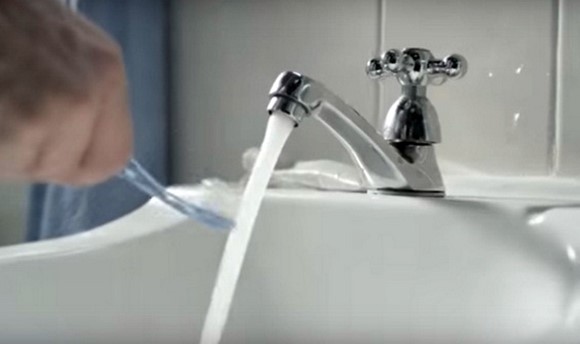
Every living being needs water. Our bodies are made of almost 70% water. However, we are starting to face a water crisis, because of wastage & overuse of water resources. Saving water is essential and needed for us, and many more generations to come. In this article, we will discuss several ways to save water.